Stinging nettle root works. That part is settled science. The real question is whether it works better as a standalone supplement — or as one ingredient in a multi-botanical prostate stack.
The answer matters because nettle is sold both ways, and the price difference is significant. Here's what the trials actually tell us.
The Evidence Base for Nettle Root
Stinging nettle root (Urtica dioica) has been studied in over a dozen randomized controlled trials for benign prostatic hyperplasia. The mechanisms are real and well-characterized:
- Modulates sex hormone-binding globulin (SHBG), reducing free testosterone available for DHT conversion
- Inhibits aromatase, indirectly affecting hormonal balance in prostate tissue
- Anti-inflammatory effect through lignans and polysaccharides that reduce prostatic inflammation
- Reduces prostate cell proliferation in vitro
The largest single trial — Safarinejad 2005 — gave 558 men either nettle root extract or placebo for six months. The nettle group cut IPSS scores nearly in half (from 19.8 to 11.8). Placebo barely moved. Maximum urinary flow improved meaningfully. Nocturia frequency dropped.
Translation: this is not a fringe botanical. It works.
So Why Not Just Take Nettle Root Solo?
Because the prostate is hit by multiple parallel mechanisms — and nettle covers only some of them.
BPH and prostate inflammation are driven by three core processes:
| Mechanism | What It Does | Nettle Root Coverage |
|---|---|---|
| 5-alpha reductase / DHT conversion | Drives prostate cell growth | Indirect (via SHBG) — modest effect |
| Prostatic inflammation | Causes swelling and pressure | Strong — direct anti-inflammatory action |
| Bladder dysfunction | Causes incomplete emptying | Minimal — nettle does not act on bladder muscle |
Nettle is excellent at one mechanism, partial at another, and weak at the third. A man with mostly inflammation-driven symptoms might do well on nettle alone. A man with bladder dysfunction (which is the dominant issue in roughly 60% of BPH cases over 60) won’t get full relief from nettle solo.
"I was on nettle root capsules for four months. Urgency improved a little, but I was still going twice a night. Switched to a multi-botanical formula and within 8 weeks I was down to one trip. The combo did what nettle alone couldn't."
— Daniel R., 58, on combo formula switch
The Combination Edge: What the Trials Show
Several trials have directly compared nettle root alone vs nettle + saw palmetto:
- Lopatkin et al. (2005): 256 men. Nettle + saw palmetto outperformed placebo significantly more than either alone, with faster onset of relief.
- Sökeland (2000): 489 men over 24 weeks. Nettle + saw palmetto matched the prescription drug finasteride for symptom relief — without the side effects.
- Engelmann (2006): Combination produced 32% greater IPSS reduction vs single-ingredient comparison.
The biological logic is straightforward: nettle and saw palmetto hit different mechanisms. Nettle handles inflammation and SHBG. Saw palmetto blocks DHT. Together they cover roughly two-thirds of the BPH biology — and adding pygeum (which improves bladder contractility) closes the gap on the remaining mechanism.
The Editor’s Pick for Combination Coverage
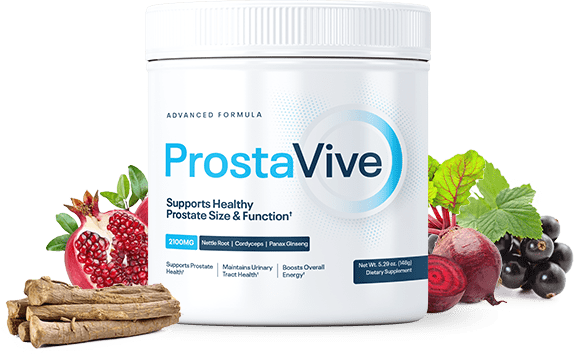
ProstaVive
- Nettle Root + Saw Palmetto + Pygeum at clinical doses
- Plus 5 supporting botanicals for full prostate + vitality
- 180-day money-back guarantee, ships free with bundles
When Standalone Nettle Root Makes Sense
There are real scenarios where standalone nettle is the right choice:
- You’re under 45 and want preventive support — single-ingredient is enough at that life stage
- You have allergic rhinitis plus mild urinary urgency — nettle (especially leaf + root combo) handles both
- You’re already taking saw palmetto separately — adding nettle as a complement is rational
- You’re on a tight budget and need to start somewhere — solo nettle at 300+ mg is a reasonable first step
In all other cases — particularly men over 50 with full BPH symptoms — the combination is the better starting point.
What to Look for on a Nettle Root Label
Whether you choose standalone or combination, the same label rules apply:
✅ Says “root extract” explicitly (leaf is for allergies, not prostate) ✅ Standardized to a marker compound (often beta-sitosterol or polysaccharides) ✅ Dose of 300 mg or higher per serving ✅ Manufactured in a GMP-certified facility
❌ Avoid: “Nettle leaf and root blend” without dose breakdown, proprietary blends that hide the nettle dose, products under 200 mg per serving.
Want to Compare Other Buyer’s Guides?
For the full ranking of prostate formulas, see our Top 5 Prostate Supplements for BPH in 2026. If you’re worried about nighttime urination specifically, our deep dive Is There a Supplement to Stop Waking Up 3 Times a Night to Pee? covers the protocol that targets nocturia.
Final Take: Combination Wins for Most Men
Nettle root is a real botanical with real evidence — but it’s one tool, and BPH is a multi-mechanism problem. Standalone nettle works for younger men, mild cases, or as a complement to existing supplementation. For most men over 50 dealing with full BPH symptoms, a properly formulated combination — nettle + saw palmetto + pygeum at clinical doses — outperforms any single ingredient.
ProstaVive is built around exactly that combination, with four supporting botanicals for broader male vitality. It’s the formula we’d recommend over standalone nettle for anyone with full BPH symptoms.
Get the Full Botanical Combination
Skip the single-ingredient guesswork. ProstaVive combines nettle, saw palmetto, pygeum and five more — at clinical doses, in one capsule.
Get Your Discount →